
THE LIONS ARE STARVING

Spoiler alert — this isn’t about lions.
By: Vanessa Norris
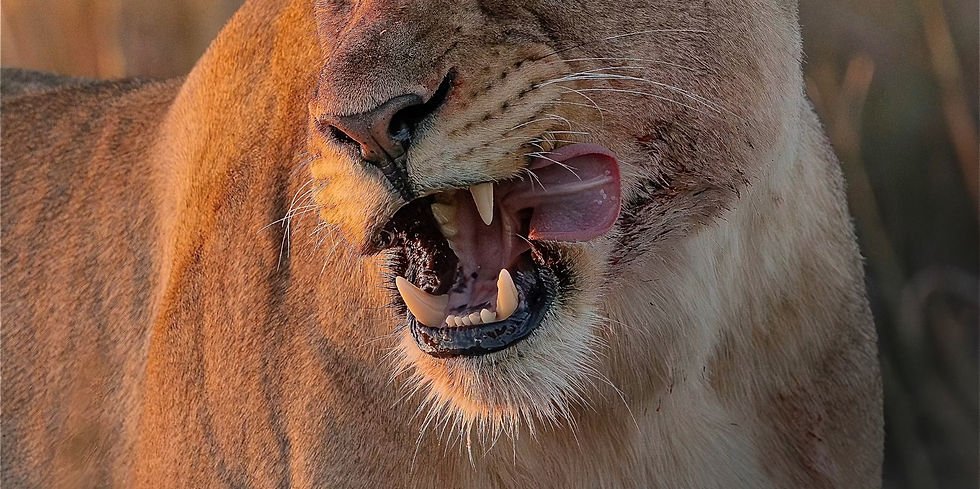
It’s a good hunting season.
There are endless deer. In the trees, in the fields, on the roads. There are simply too many. Shrubs and grasses are depleting, and car collisions are on the rise.
The town has loosened hunting regulations, allowing residents to shoot deer on sight. Hunters are trigger-happy, and the town is free to gorge themselves on slathered venison until their feet swell and their bellies ache.
Simultaneously, conservationists gather and pore over data. Where has the deer’s top predator gone? Where are the packs of lions that have scoured and hunted the landscape for decades?
The answer is easy enough: the lions are starving. Their ribs and spines protrude grotesquely through their skin. Their heart rates are slowed. Their muscles and fat are burned through. Their organs fail, one by one, until they eventually succumb to disease or malnourishment.
The mystery no one can solve is why. When there’s plenty of deer, water and habitat space, why won’t they eat? Don’t they have a primal instinct to hunt when they’re hungry? Why are they wasting away, letting their minds exhaust themselves and their wombs rot?
By nature, lions learn from each other. It’s how they find the right prey in the right location during the right season. The ideal spot on an animal’s neck to sink teeth into. Mate selection and competition. Cubs learn how to survive from their mothers and aunts, so why is the system failing? What’s changed?
Since when did the deadliest predators of the land collectively decide to be weak? Since when did they look at their bodies, reflected in the river, and think, “I need to be thinner?”
The truth is, this isn’t about lions.
It’s funny how we, as humans, celebrate the sight of starvation in only one species — our own.
An emaciated dog roaming the streets is appalling. Humans instinctively react, providing food and water to a helpless creature in need. But when a woman thins out — when her bones protrude and her period is lost — we compliment her. We say, “Wow, you look great!” and ask for weight-loss tips.
When women starve themselves, we don’t ask why they won’t eat. We don’t say, “This is ruining our ecosystem and society! This is damaging to our young!”
Instead, we nurture the behavior until it’s normalized. We see an emaciated performer singing on stage, and we throw flowers at her feet. Little girls hang photos of her on their light pink walls. Teenage girls obsess over pictures of her until they’re convinced that, yes, they do need to be more disciplined.
No one sees how her body grows tiny hairs to protect itself from the cold. No one sees how her molars are eroding from thrown-up stomach acid. No one sees how black spots flood her vision every morning she gets out of bed.
The starving lions are ignored because the town feeds on them being frailer, thinner, tinier. Emaciated lions mean a good hunting season, and who wouldn’t want that?
The starving lions are glamorous to a world that wants them weak. Every single industry pushes thinness as the goal. Fashion teaches us we’ll fit into clothes better. Big Pharma teaches us that GLP-1s are the secret to a healthy lifestyle. Entertainment teaches us only thinness makes you worthy of love.
And yet, these rewards can only reach so far. After all, lions are still animals. The snug-fitting clothes and nice compliments and attractiveness only last until you drop dead. Despite the fatigue and obsession and discipline, the insatiable desire to taste a deer’s bloody meat on your tongue never quite goes away.
Vanessa Norris is a third-year Journalism and Public Relations student at the University of Florida. She is an online writer and editor for Rowdy Magazine and loves all things books, movies and pop culture.


Comments